Culture as a Catalyst: How Music and Arts Drive Destination Growth
Summary
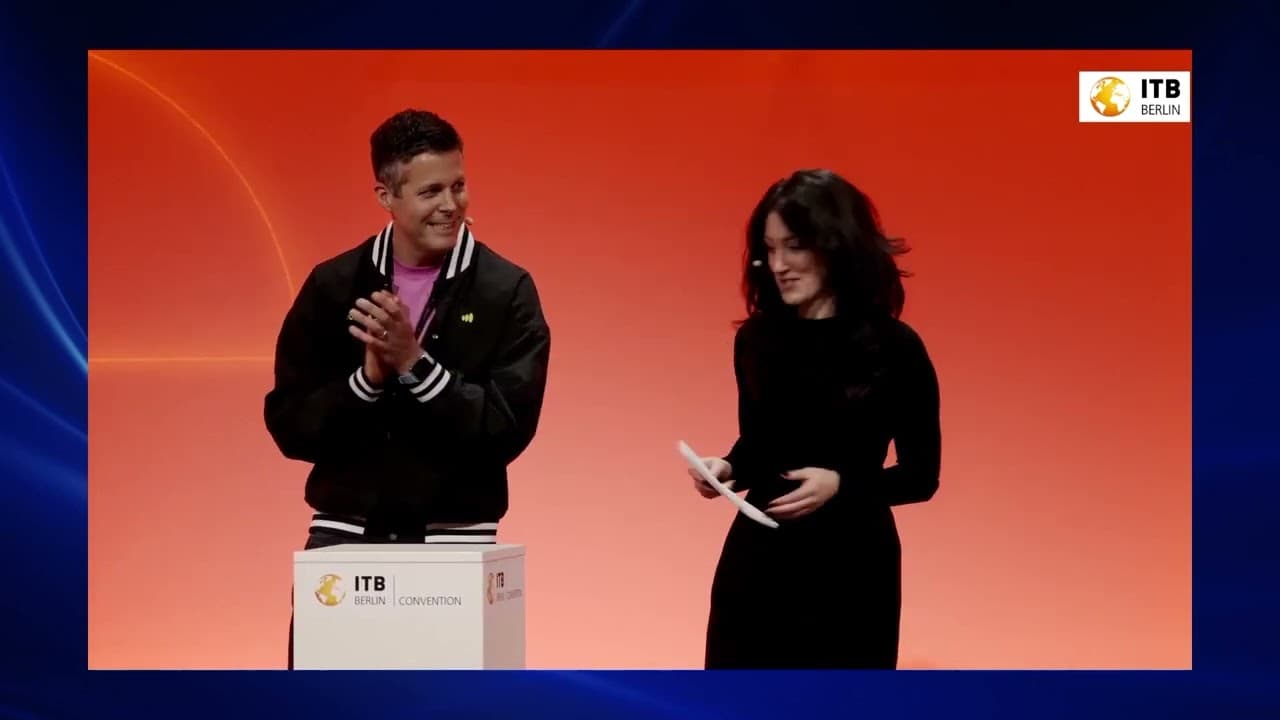
This 35-minute panel at ITB Berlin 2026 brings together four voices on how music and arts drive destination growth: Prof. Dr. Harald Pechlaner (moderator, academic), Norbert Kettner (CEO, Vienna Tourist Board), Philipp Burger (South Tyrolean musician and festival founder), and Donovan White (Jamaica Tourism). The session explores the intersection of cultural authenticity, community ownership, and tourism demand creation across three geographically distinct case studies — Vienna, South Tyrol, and Jamaica.
Norbert Kettner opens with a striking structural fact about Vienna: the city of 2 million inhabitants maintains cultural infrastructure historically sized for a city of 5 million, a legacy of its imperial past. This oversupply of culture relative to population is framed as a strategic tourism asset. Vienna reached 20 million overnight stays in 2025, and Kettner attributes a significant part of this to cultural relevance — not manufactured tourism experiences, but culture that locals actively fight over and defend. He cites 11,000 concert and music event attendees per night in Vienna, more than attend football matches. The Vienna Danube Island Festival (Donauinselfest) draws 3 million people over three days, making it the largest open-air festival in Europe. In 2026, Vienna will also host the Eurovision Song Contest, which Kettner describes as 'the biggest live music show in the world,' framing mega-events as infrastructure stress tests that validate a city's capacity for both conventions (Vienna ranks #1 globally for international conventions) and mass cultural gatherings.
Kettner introduces the concept of 'third places' — spaces like festivals and Viennese coffee houses where locals and tourists interact organically, without staged hospitality — as the most valuable intersection between destination authenticity and visitor experience. He argues that when local populations fight for their cultural institutions (debating whether programming is too classical or too modern), this internal tension itself signals relevance and makes the destination compelling to outsiders.
Philipp Burger speaks in German and is translated throughout. He represents the Alpair Festival in Brixen/Bressanone (South Tyrol), a region of 20,000 residents that draws 60,000 festival visitors — a 3:1 visitor-to-resident ratio. Burger's model handles this pressure through deep community integration: over 1,000 volunteers from local cultural associations participate in the festival without pay, grounding it in local ownership rather than external production. He stresses that art needs a non-negotiable ethical boundary — it cannot be used to incite violence or hatred — but within that, it must challenge and provoke to generate authentic expression and place identity.
Donovan White explains Jamaica's 100-year music evolution across seven distinct genres: Mento, Ska, Dub, Rock Steady, Reggae, Dancehall, and a seventh form, noting that reggae (amplified globally by Bob Marley) is merely one of these evolutions, though the most globally recognized. He also traces reggae's influence on subsequent global genres — reggaeton (a fusion of salsa and reggae), Afrobeats (whose beat structure derives from reggae), and hip-hop (credited to a Jamaican immigrant in New York who applied reggae beats to the form). Jamaica formally designates February as Reggae Month — a government-recognized 28/29-day national celebration for the country's 2.8 million people focused on cultural preservation for younger generations. White argues that music requires no methodical export strategy because it is linguistically and culturally universal — the emotional and physical response to rhythm transcends language barriers.
White closes with the panel's defining economic framing: tourism drives a circular economy, and music is the most powerful demand creator within tourism. His illustrative example: a tourist consumes up to six times more than a local. Using eggs as a proxy, he notes a tourist may consume six eggs per day embedded across drinks, pastries, and meals, amplifying demand across local supply chains — from farmers to processors. Cultural and music experiences that attract tourists activate this entire economic multiplier. The panel reaches broad consensus that authenticity cannot be manufactured from the top down: it must emerge from community ownership, and destination management organizations should position themselves as facilitators and enablers rather than controllers.
Key Takeaways
- •Vienna has cultural infrastructure sized for 5 million people despite a population of only 2 million — a Habsburg imperial legacy that functions as a structural tourism asset; this oversupply creates genuine competition and public debate over cultural programming that signals authenticity to visitors.
- •Vienna reached 20 million overnight stays in 2025. Kettner attributes this to the principle that 'if something is relevant for the local population, it is relevant for your guests' — the tourist board's strategy is to amplify what locals already fight to defend, not to manufacture tourist-specific experiences.
- •11,000 people attend concerts and music events in Vienna every single night — more than attend football matches — illustrating the depth of local cultural demand that underpins the city's visitor proposition.
- •The Donauinselfest (Vienna Danube Island Festival) is the largest open-air festival in Europe with 3 million attendees across 3 days. Kettner frames it as a 'stress test' for city infrastructure — public transport, hospitality capacity, and crowd management — with direct carryover value for Vienna's position as the world's #1 international convention city.
- •Vienna will host the Eurovision Song Contest in 2026, described by Kettner as 'the biggest live music show in the world,' providing another opportunity to demonstrate large-scale event management capability that reinforces convention and MICE market credibility.
- •Kettner introduces 'third places' as the highest-value tourism touchpoint: locations like festivals and coffee houses where locals and visitors interact in their natural habitat without staged hospitality — 'where locals and guests rub their shoulders together, sweating together, screaming together.' These spaces deliver the cultural immersion tourists increasingly seek.
- •Jamaica's music has produced 7 distinct genres over 100 years: Mento, Ska, Dub, Rock Steady, Reggae, Dancehall, and a seventh form. Reggae's global influence spawned reggaeton (Spanish-language fusion), Afrobeats (same rhythmic foundation), and hip-hop (credited by White to a Jamaican immigrant in New York applying reggae beats). This positions reggae not just as a genre but as a global musical catalyst.
Transcript
I'm very happy that uh we have this half an hour. That's not that much of much of time which we have but nevertheless uh it should be uh an interesting uh discussion just bring together music and destination uh growth music and sustainability politics of uh touristic destinations. Let's see what uh the discussion will bring out uh from that point of view. I will start and present the single uh members of the panel uh one after the next. I will start with uh Novat Ka. He is a famous touristic per...