Jennifer B. Wallace
Summary
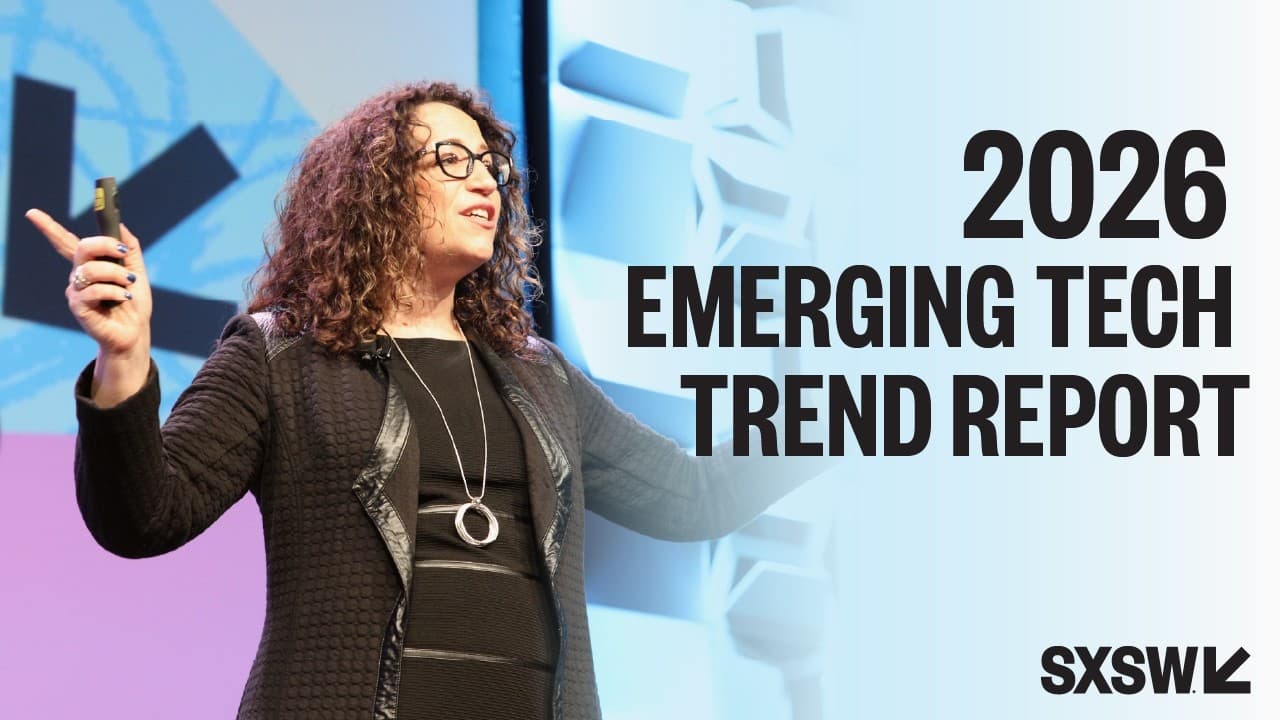
Jennifer B. Wallace, bestselling author of 'Mattering,' delivers a keynote at SXSW 2026 exploring mattering — the fundamental human need to feel valued and to add value to others — as the central driver of wellbeing, connection, and resilience. Wallace opens by observing a cultural wave of nostalgia (soaring vinyl sales, retro Pizza Hut restaurants, landline phones returning) and argues that what people are truly longing for is not the artifacts of the past but the sense of mattering that was embedded in older social structures: card games with neighbors, undivided attention on phone calls, communal interdependence. She positions mattering as an evolutionary inheritance: for early humans, being valued by the group meant survival, and being cast out meant death. That ancient wiring still drives modern behavior — when people feel they matter, they engage, contribute, and connect; when they don't, they suffer anxiety, depression, numbness, and in extreme cases, suicidal ideation. Studies of suicidal men find the words 'useless' and 'worthless' dominate their self-descriptions, capturing the weight of anti-mattering. Wallace also flags a looming societal crisis: tech leaders predict that within 10 years, humans may not be required for most tasks, threatening to erode mattering on an unprecedented scale.
The core of the talk is the SAID framework — four ingredients of mattering: Significant (being uniquely known and important), Appreciated (knowing that who you are and what you do makes a difference), Invested In (having someone in your corner), and Depended On (being needed and trusted). On significance, Wallace finds that people rarely recall milestone moments as mattering experiences; instead they cite small, everyday gestures — a neighbor bringing soup, a colleague remembering a preference for M&Ms. She introduces the concept of 'socially prescribed perfectionism' and the 'beautiful mess effect': research shows people systematically overestimate how perfect they need to be to earn connection, and underestimate how much their flaws actually draw others closer. On appreciation, Wallace cites Gallup data showing 70% of employees feel disengaged — not from laziness but from not believing their work makes a difference. She shares the example of a factory in Phillips, Wisconsin, where management placed story cards at each workstation linking the manufactured part to the person who would use it, visibly reducing turnover and lifting morale. She also describes a NYC nonprofit where the executive director introduced a Post-it note wall of appreciation focused on the 'doer' (their tenacity, creativity) rather than the deed, causing previously quiet staff to begin speaking up in meetings. Research shows employees who receive meaningful, specific feedback are 48% less likely to be job hunting and up to five times more engaged.
On being invested in, Wallace tells the story of Rayhan — a sanitation worker whose colleagues believed in his college potential so deeply they arranged a meeting with a community college dean on his behalf. Rayhan eventually graduated from Harvard Law School and created a yearly event at Harvard recognizing cafeteria and custodial staff. Wallace uses this arc to illustrate 'ego extension' — the psychological phenomenon where investing in someone else's success causes their wins to feel like your own. On dependence, Wallace argues that modern convenience culture has eroded healthy interdependence: people now use task-for-hire apps for small favors (bringing packages inside, cleaning a litter box while pregnant) that neighbors once performed freely. She contends these small asks are not trivial — they are the building blocks of friendship, team cohesion, and neighborhood identity. The talk closes with a call to treat everyone as wearing an invisible sign asking 'Do I matter?' — and to answer with eye contact, words of appreciation, rooting people on, and letting them know they are depended upon. A Q&A segment addresses practical applications: designing mattering into organizational systems, distinguishing genuine mattering from superficial appreciation programs, supporting educators, nurturing children's mattering, and handling 360-degree reviews within cultures of mattering.
Key Takeaways
- •Mattering is a fundamental human need — to feel valued and to add value — rooted in evolutionary biology where being valued by the group meant survival and being cast out meant death. This ancient wiring still drives modern behavior.
- •The cultural wave of nostalgia (vinyl records, retro diners, landline phones) is not about the objects themselves but about yearning for the embedded sense of mattering that older social structures provided.
- •Tech leaders predict that within 10 years humans may not be required for most tasks, threatening to erode the sense of mattering on an unprecedented societal scale — making this the defining challenge of the AI era.
- •Mattering is measurable via a five-question scale (importance to others, attention from others, being missed, being depended on, others showing care) and is not fixed — practical interventions can raise it.
- •The SAID framework captures the four ingredients of mattering: Significant (uniquely known), Appreciated (your contribution makes a difference), Invested In (someone is in your corner), Depended On (you are needed and trusted).
- •People almost never cite life's big milestone moments as times they felt they mattered. They cite small, everyday gestures — a neighbor's pot of soup, a colleague remembering their M&M preference — revealing that mattering lives in the mundane details of life.
- •The 'beautiful mess effect' shows people systematically overestimate how perfect they need to be to deserve connection and underestimate how much their flaws draw others closer. Authenticity, not perfection, creates real bonds.
- •70% of employees report feeling disengaged at work (Gallup). The primary driver is not laziness but the belief that their work doesn't make a difference — withdrawal is a self-protective coping strategy against invisibility.
- •A Wisconsin factory improved morale and retention by placing story cards at each workstation showing how the manufactured part fit into the final product and who would use it — giving workers a direct line of sight to their impact.
Transcript
[applause] Hi everyone. I am so happy to be here with you today. So, I'm curious. I've been noticing something lately and I'm curious if you've been noticing it, too. We are living through one of the biggest waves of innovation in human history. And yet, we can't stop reaching for the past. Vinyl record sales are soaring. Landline phones are back, as are disposable cameras. I saw a bunch of these in the lobby today. People are driving for hours to visit Pizza Hut Classics. Have you heard of thes...