Connecting Digital Identity, Seamless Experiences and the Mobility Ecosystem
Summary
Peter Altmann, VP Mobility and Travel Protection at Amadeus, delivered a focused presentation at ITB Berlin 2026 making the case for digital identity as a strategic enabler for seamless travel experiences — with car rental as the primary use case. Altmann opened by posing a live poll to the audience: how many were truly satisfied with their last long-haul end-to-end travel experience? Only one hand went up, illustrating the gap between traveler expectations and reality. He recounted a personal anecdote where he was required to produce a physical paper printout of his ESTA approval at an airline check-in counter in the US, nearly derailing his trip.
Altmann positioned the core problem as a tale of two industries: airlines and airports have invested heavily in digital flows — mobile check-in, biometric passport scanning, digital boarding passes — raising traveler expectations across all touchpoints. Car rental, by contrast, remains largely unchanged from decades ago: paper-heavy, manual, and slow at the counter. He cited the Amadeus Travel Dream Study (2025) which identified paperwork and the length of the checkout process as the top pain point in the car rental experience. Rather than framing this as a failure, Altmann recast it as a significant loyalty opportunity — companies that digitalize this process can generate differentiated loyalty.
The proposed solution is the EU Digital Identity Wallet, which Altmann described as imminent EU legislation arriving within two years. The wallet will allow travelers to store and share highly sensitive credentials — including a mobile driving license — as well as everyday documents like gym membership cards. Its core functions are: authenticate, store, share, and sign (enabling binding digital signatures). For car rental, this means a traveler could share their mobile driving license with a car rental company pre-arrival, eliminating counter paperwork and document verification time.
Amadeus already has partnerships spanning airlines, airports, ground handlers, border control authorities, cruise terminals, and cruise lines. The company's stated vision is to digitalize the full end-to-end travel experience from booking to return home. Altmann announced a concrete milestone during the Q&A: Amadeus will go to market in March with the first MVP enabling a fully digital car rental flow — digital booking, document validation, digital rental agreement, and car unlock via a mobile application.
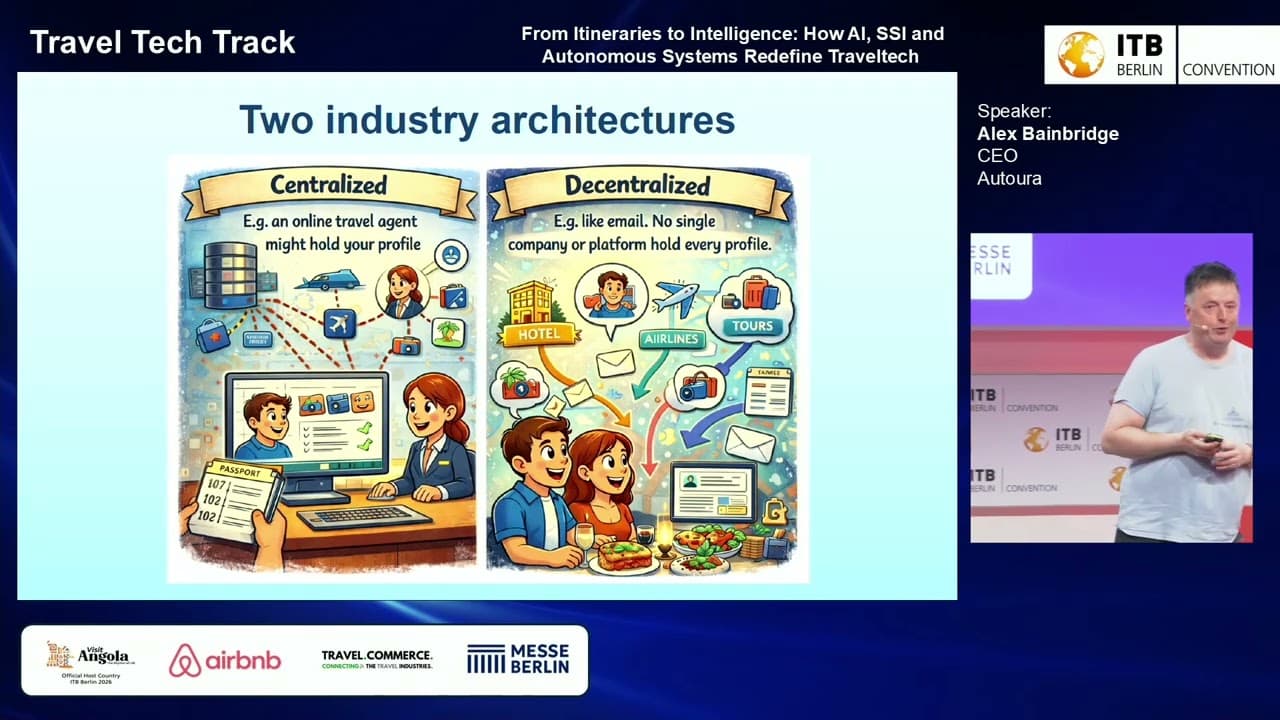
The Q&A surfaced an important architecture debate between Altmann and another session speaker (Alex) on centralized vs. decentralized identity. Altmann confirmed Amadeus's approach is decentralized and consent-based, aligning with the EU Digital Identity Wallet's consent framework. Alex then introduced a third, more complex layer — delegation — where, for example, a hotel receives traveler preferences from an airline, and then needs to delegate a subset of that data to a restaurant without returning to the consumer for re-consent each time. Alex predicted: 'We're going to be talking about delegation for the next 5 years.' Altmann acknowledged this is not trivial, especially with legal documents like passports.
Key Takeaways
- •Audience live poll at ITB Berlin 2026 found almost no one satisfied with their last end-to-end long-haul trip — only one hand raised in the room, underscoring the scale of the problem.
- •Airlines and airports have set traveler expectations so high through digital investment that car rental — still largely paper-based and manual — suffers a severe satisfaction deficit by comparison.
- •The Amadeus Travel Dream Study (2025) identified paperwork and long checkout time as the #1 pain point in car rental, framed by Altmann as a 'huge opportunity for loyalty' if digitalized.
- •The EU Digital Identity Wallet is not a future concept — it is coming by EU law within two years. It supports storing mobile driving licenses, membership cards, and other documents, with authenticate/store/share/sign functionality.
- •Amadeus is actively collaborating with the European Union on the EU Digital Identity Wallet as part of a travel industry consortium.
- •Amadeus announced its first MVP going to market in March 2026: a fully digital car rental flow covering booking, document validation, digital rental agreement, and car unlock via mobile app.
- •The Amadeus vision extends beyond car rental: once a traveler has been validated by an airline and cleared border control, that trust signal could be shared with car rental companies and hotels, enabling a cascading end-to-end digital experience.
- •Amadeus currently has partnerships across airlines, airports, ground handlers, border control authorities, cruise terminals, and cruise lines — car rental is the next frontier.
- •Altmann confirmed Amadeus's digital identity approach is decentralized and consent-based, aligning with the EU wallet's framework — the traveler must consent before any data is shared with a provider.
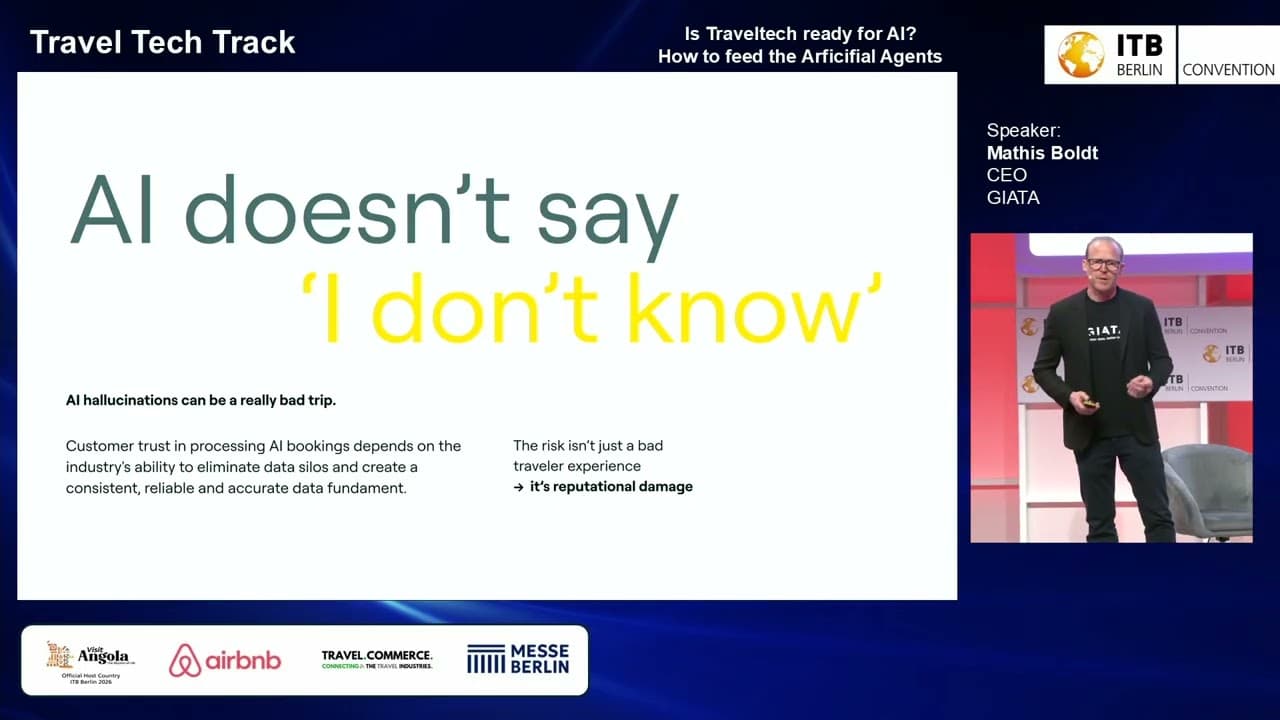
- Delegation emerged as the critical unsolved problem in the Q&A: when an airline shares preferences with a hotel, and the hotel needs to pass data to a restaurant, going back to the consumer for re-consent each time is impractical. Speaker Alex stated: 'We're going to be talking about delegation for the next 5 years.'
Transcript
paint onto on onto the same picture. We missed a few components like the digital identities which become essential in our industry as well and of course we have the GDS in the match and I'm really happy to to have Peter Alman here the vice president mobility and travel protection of Amados. Peter, you're talking about the revolution travel experiences connecting the digital identities seamless seamless experiences and the mobility ecosystem. How does it work in 20 minutes? Wow. Peter stick. >> T...