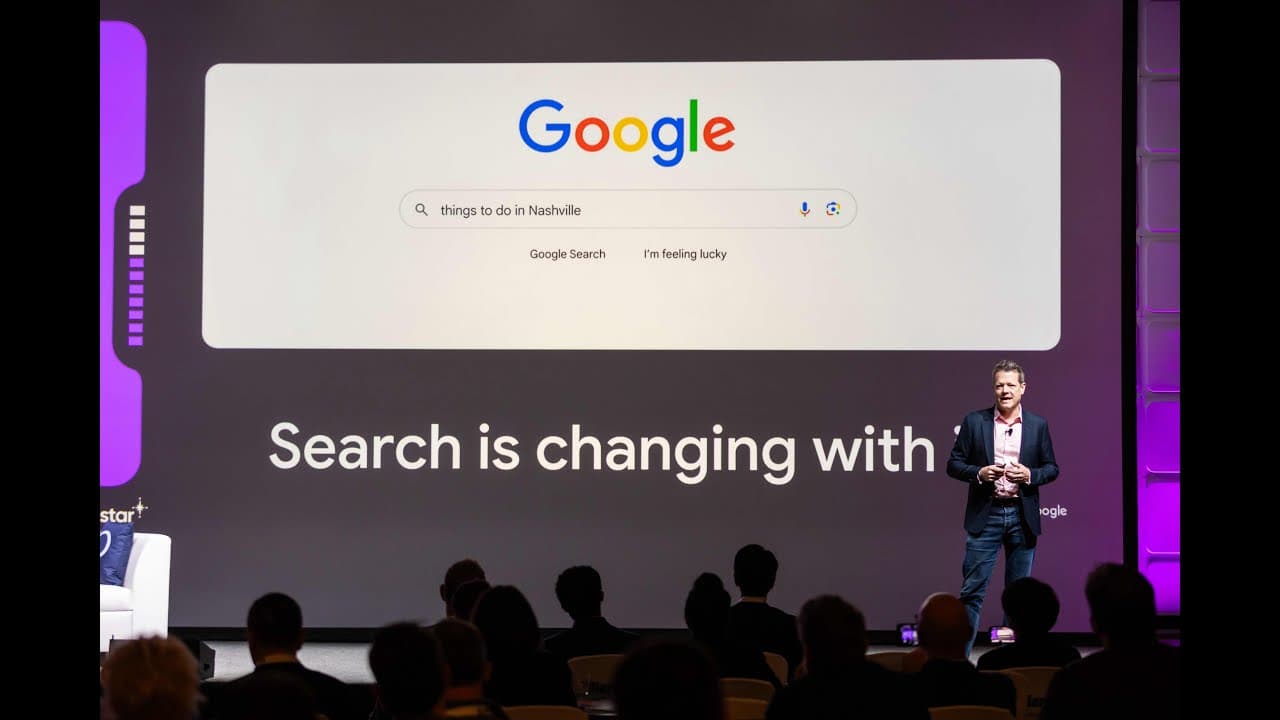
Changemakers: Mize at The #Phocuswright Conference 2025
Summary
Dor Krubiner, CEO and co-founder of Mize, presents the company's concept of the 'invisible loss' in travel — the revenue and demand destroyed by structural inefficiencies in hotel inventory and rate systems. Mize currently supports over 200 travel intermediary partners generating $30 billion annually and claims to contribute hundreds of millions of dollars in additional profit to those partners each year.
Krubiner identifies two core market gaps. The first is the 'availability gap': hotel rooms that appear unavailable but will eventually become bookable — either because they are held in allotments and later released, temporarily restricted to specific channels, or because cancellations will free them up. The second is the 'rate type gap': travelers seeking flexibility-versus-price combinations that don't exist in the binary refundable/non-refundable model hotels currently offer. A traveler may find the refundable premium too high, encounter no non-refundable option at all, or want a partial-refund option that balances cost and flexibility.
Krubiner frames these as market connection failures rather than supply or demand failures — the supply and demand both exist, but cannot connect efficiently. He draws a direct analogy to financial markets, which solved a similar mismatch decades ago through 'market makers': financial entities that engineer supply and demand where it doesn't naturally exist, resulting in near-continuous liquidity.
Mize's answer is what Krubiner calls the 'Mize Market Maker' — described as the first real AI travel market maker. Rather than routing existing inventory, Mize creates synthetic inventory. When a traveler tries to book a room that shows as unavailable, Mize's AI predicts whether that room will become available in the future. If the prediction is confident, Mize allows the traveler to complete a reservation into a synthetic room, then allocates a real room once the market shows availability. The system uses 10 years of proprietary data covering availability patterns, cancellation rates, and rate data to train prediction algorithms.
On risk management, Krubiner is explicit: Mize carries the financial risk of wrong predictions. The system is selective — it only underwrites synthetic availability when prediction confidence is high, and it avoids obvious high-risk scenarios such as guaranteeing a room in a fully sold-out resort during peak season. He illustrates the approach with a layered room-type example: guaranteeing a deluxe room when four other room types remain available is manageable because, in a worst case, the traveler can be upgraded to a junior suite at cost to Mize. The company views risk appetite management as a core competitive moat.
Krubiner draws a parallel to airline overbooking as a proven precedent for selling beyond confirmed availability, noting the key distinction that Mize operates at the intermediary layer rather than the hotel product layer. The rollout is planned to begin in early 2026. The session is conducted as a presentation followed by an interview with Robert Cole, Senior Research Analyst at Phocuswright.
Key Takeaways
- •Rooms that appear unavailable are often just temporarily inaccessible — allotments, channel restrictions, or pending cancellations — representing a large untapped conversion opportunity for intermediaries.
- •The binary refundable/non-refundable pricing model fails to match actual traveler demand; partial-refund or flexible rate products could unlock significant bookings.
- •Applying the financial market-maker concept to travel — creating synthetic supply where natural supply is temporarily absent — is technically and commercially viable with sufficient predictive data.
- •Risk in synthetic inventory can be managed through selectivity: only underwrite availability when prediction confidence is high and when fallback room-type options exist.
- •Intermediaries benefit directly from synthetic availability because it converts searches that would otherwise result in a competitor booking.
- •Hotels benefit from synthetic inventory at the intermediary layer because they capture demand they would have permanently lost to competitors.
- •Ten years of proprietary cancellation, availability, and rate pattern data is a key barrier to entry for replicating this market-maker model.
- •Airline overbooking is a proven precedent that normalizes selling beyond confirmed availability, signaling this model has commercial acceptance potential in adjacent travel sectors.
- •Travel technology companies that are willing to absorb financial risk — rather than pass it entirely to hotels or travelers — can create a durable structural advantage.
- •Mize's planned 2026 rollout positions the company as an early mover in AI-driven synthetic travel inventory, a segment with no direct current competitor.
Transcript
My name is Doc Rubiner and I'm the CEO and co-founder of MAS. And in the past 10 years, we're building an AI revenue growth infrastructure for travel intermediaries. With our suite of solutions, we're currently supporting over 200 partners generating $30 billion each year. But most importantly, it's what really makes us proud that we're contributing hundreds of millions of dollars in extra profit annually to our partners. I'm here to speak to you today about what we're calling the invisible loss...