Everyone's trying to sell travel - The New Travel Seller Arena at The #Phocuswright Conference
Summary
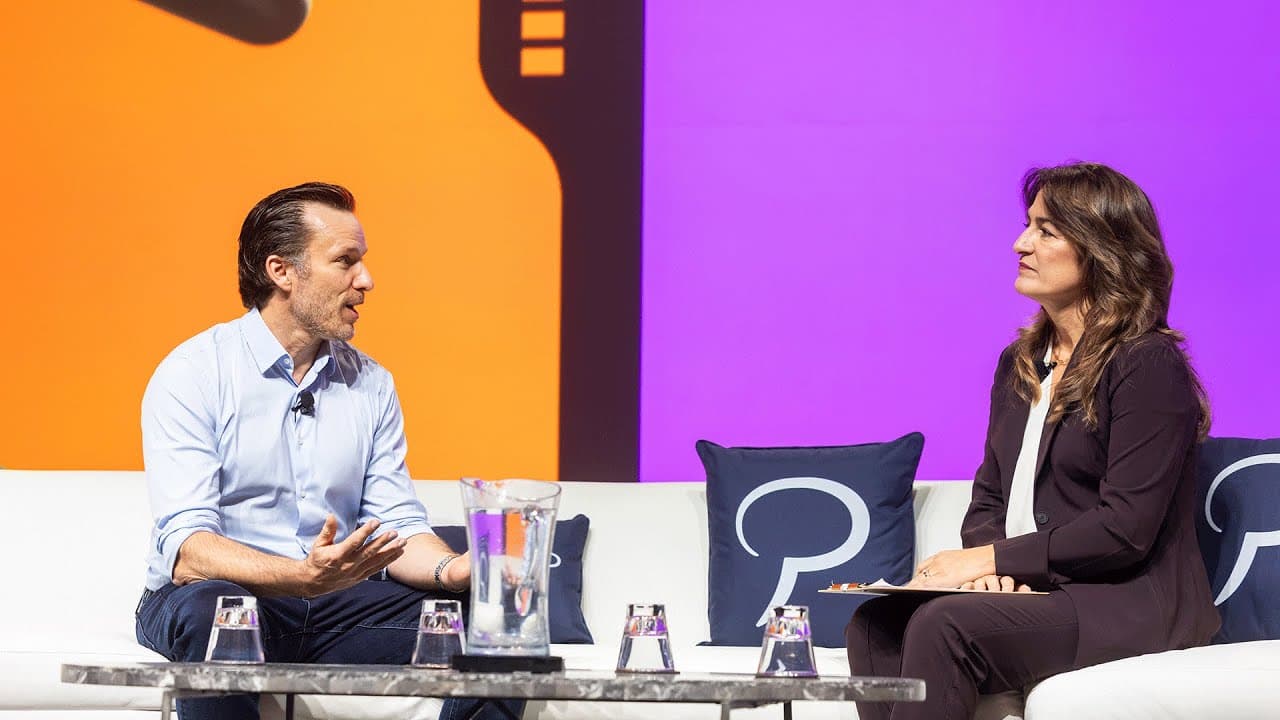
This Phocuswright Conference panel, moderated by Lorraine Sileo, examines the emergence of non-traditional travel retailers — particularly financial institutions, fintechs, and neo-banks — and the forces reshaping travel distribution. The session features Jason Wynn (CEO, Chase Travel), Dakota Smith (President and Co-Founder, HTS/Hopper), and Kenneth Purcell (CEO/Founder, iSeatz).
Jason Wynn describes Chase Travel's strategy as building a vertically integrated travel operating system rather than simply embedding a third-party OTA. Chase has made multiple acquisitions including CX Loyalty (booking engine and fulfillment), Frost (luxury leisure and corporate travel), The Infatuation (dining discovery), and a payments/offers platform called Fig, while also investing heavily in airport lounges. The goal is a seamless end-to-end lifestyle platform that leverages Chase's existing financial trust and deep customer data. Wynn notes that 65% of new card acquisitions are millennials and Gen Z — a cohort demonstrating resilience to macro downturns and, paradoxically, declining loyalty to traditional travel brands. Chase Travel has been growing at approximately 20% CAGR and was targeting $15 billion in annual gross bookings, revised to $12 billion for the current year.
Dakota Smith explains that Hopper began as a consumer app but pivoted its B2B division — Hopper Technology Solutions (HTS) — which now represents over 90% of the company's revenue. Hopper decouples its fintech ancillary products (price freeze, cancel-for-any-reason, disruption assistance) and makes them available via API to any travel seller globally. A case study with Nubank in Brazil illustrates the model: instead of loyalty points (less relevant in a developing market), Nubank offers travelers 12-month installment plans at 0% APR — a compelling proposition versus Brazil's average consumer APR of 35%. Hopper's agentic AI assistant, ACS Assist, has been powering approximately 3 million live customer service conversations per year and is being deployed with a major Japanese bank for Japanese-language frontline support. Smith notes that new enterprise products are incubated and rigorously tested in Hopper's consumer app before being offered to large institutional partners.
Kenneth Purcell, who powers the American Express Travel platform through iSeatz (a relationship in place since 2012), argues that financial institutions benefit from pre-existing consumer trust — a factor that traditional OTAs have eroded over time. He estimates the US financial institution travel marketplace at $45–50 billion in total gross bookings, a fraction of the overall travel market but growing rapidly. Purcell and Wynn agree that OTA B2C businesses face structural pressure from this trend, while OTA B2B supply businesses (e.g., Expedia's B2B segment, cited as growing over 25% year-on-year and representing ~30% of Expedia's over $100 billion in gross bookings) will continue to benefit as the distribution layer behind these financial institution platforms.
The panel also discusses the personalization gap: all three panelists acknowledge that despite access to vast customer data, meaningful personalization remains largely unrealized and is not materially better than it was in 2019. There is cautious optimism about agentic AI unlocking personalization, but skepticism about near-term timelines. Wynn frames Chase's approach as first owning the underlying lifestyle assets (travel, dining, events, offers), then stitching them together with data, describing the current state as very early-stage.
A Phocuswright research slide presented during the session shows that younger travelers (Gen Z and millennials) report greater loyalty to non-travel brands than to travel brands, driven by the perceived exclusivity and inaccessibility of traditional travel loyalty tiers for lower-spending younger customers.
Key Takeaways
- •Financial institutions are building travel operating systems — not just embedding OTAs — through acquisitions of fulfillment engines, luxury travel agencies, dining platforms, and payments infrastructure, positioning themselves as lifestyle intermediaries.
- •Chase Travel targets $12 billion in annual gross bookings (revised from $15B) at ~20% CAGR, demonstrating that bank-owned travel channels can scale meaningfully without relying on mass consumer advertising.
- •Hopper's B2B revenue now exceeds 90% of total company revenue, showing that fintech travel ancillaries (price freeze, disruption protection, installment payments) have broad applicability beyond the originating consumer app.
- •In emerging markets like Brazil, installment payment plans (0% APR via Nubank vs. 35% market average) are a more effective travel loyalty mechanism than points, indicating that loyalty infrastructure must be adapted to local financial realities.
- •A Phocuswright data slide confirms Gen Z and millennials show higher brand loyalty to non-travel companies than to airlines and hotels — driven by the perceived inaccessibility of top-tier travel loyalty benefits for younger, lower-spend customers.
- •Traditional travel brand loyalty has been undermined by the elimination of meaningful upgrade availability as revenue management fills premium cabins with full-fare passengers, removing the aspirational reward for frequent travelers.
- •OTA B2B supply businesses (e.g., Expedia's B2B segment) continue to grow regardless of the B2C disruption, as financial institution travel platforms depend on OTA inventory APIs — OTAs benefit from both sides of the shift.
- •Personalization in travel remains largely unrealized even among data-rich financial institutions; panelists estimate no material improvement over 2019 levels, despite access to transaction data across travel, dining, events, and everyday spend.
- Agentic AI should be incubated in owned consumer channels first and validated with rigorous data before being offered to enterprise partners — large institutions have low tolerance for experimental products at scale.
Transcript
Okay, we're all here. Wonderful. So, centered on >> late >> loyalty and convenience, there is a new wave of travel retailers. What is driving this trend and what is in it for the customer? So, that's what we're going to find out today. our steam panel and I want to ask my first question is are you all involved because everybody's a little different what you're all doing but you're all involved in some way in um creating new brands of intermediaries that center that are at that intersection of lo...