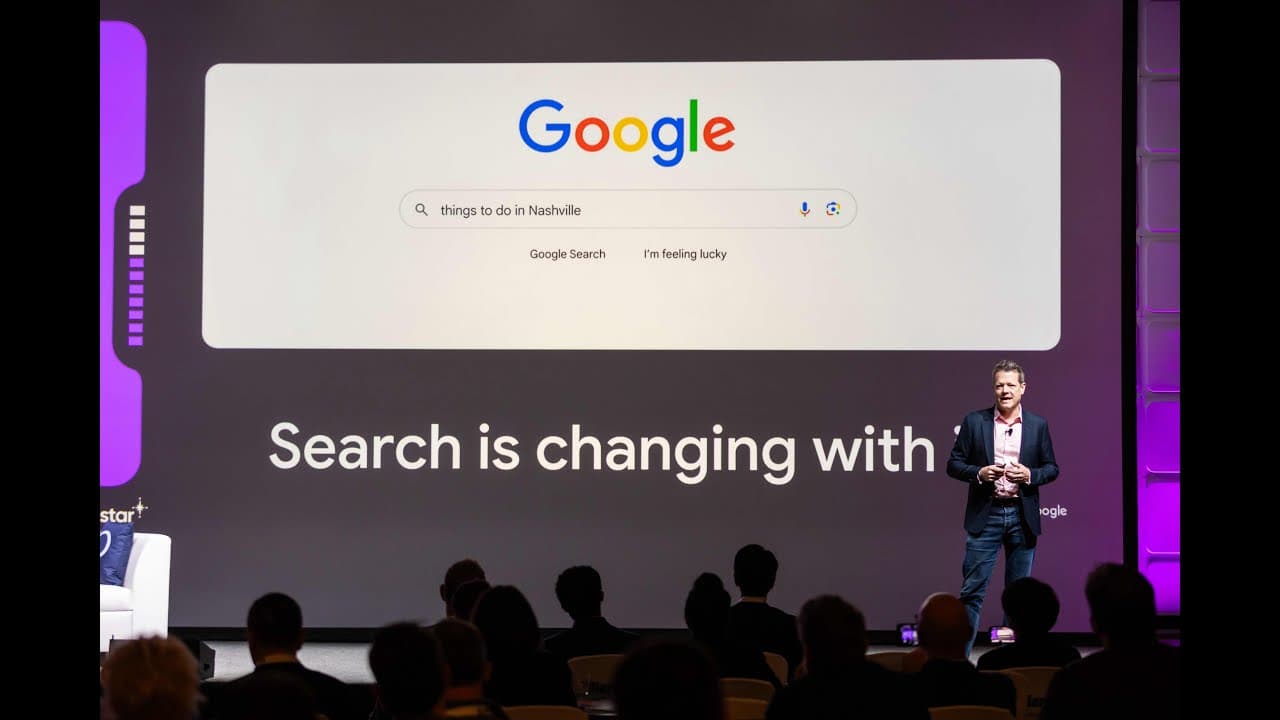
How to compete for the modern hotel guest - The #Phocuswright Conference
Summary
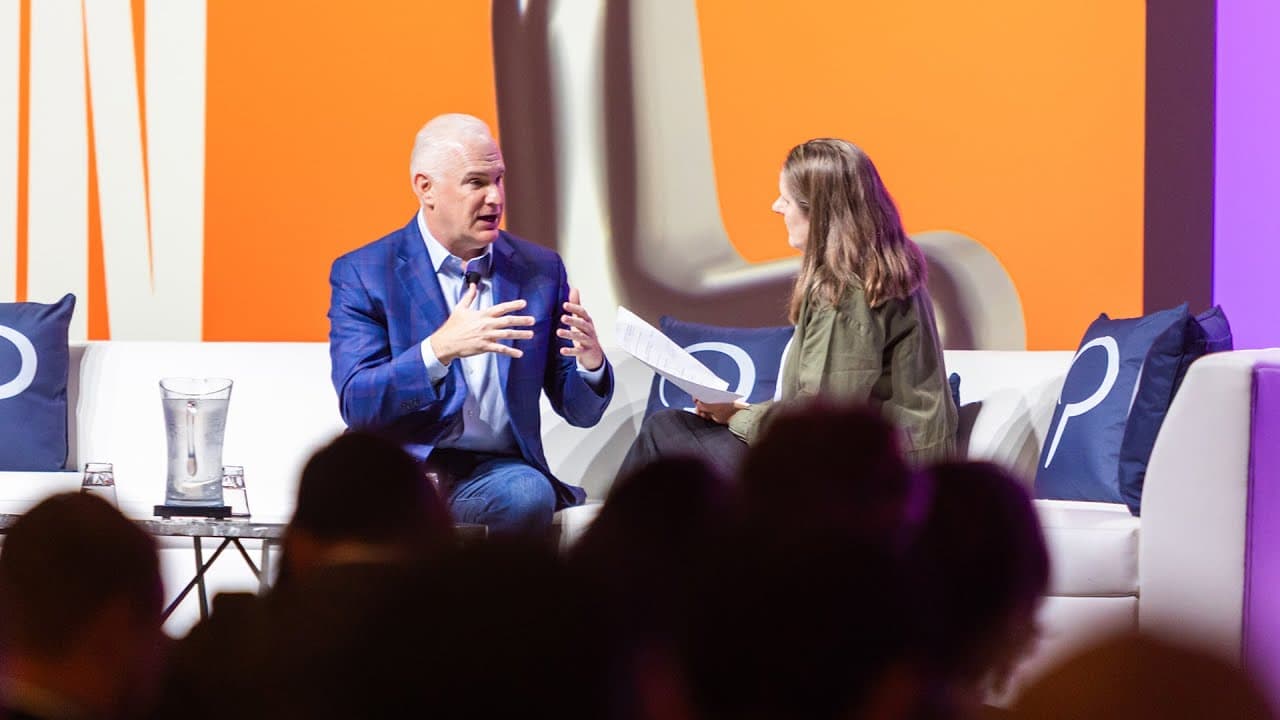
This Phocuswright Conference panel brings together four hospitality industry leaders — Jean-Jacques Morin (Group Deputy CEO, Accor), Lennert de Jong (CEO, citizenM Hotels), Adam Harris (CEO, Cloudbeds), and Kristie Goshow (former CCO, Peregrine Hospitality) — to explore how technology and strategy are reshaping the modern guest experience. Moderated by PhocusWire's Linda Fox, the session covers the current readiness of hotels for tech-savvy guests, the transformation of search and booking via AI, and the future of distribution.
The panel opens with a frank assessment of where hotels are falling short. Jean-Jacques Morin argues that while investment in technology has been significant, the industry still suffers from poor data quality due to siloed systems — PMS, CRS, and other platforms that do not communicate effectively. Lennert de Jong echoes this, observing that hotels have 'taken a lot of joy out of hospitality' by automating poorly and failing to match the seamless experiences guests now expect from airlines and ride-hailing platforms. He notes that citizenM has 22 FTE handling reservations across 36 global hotels, processing 55,000 invoice requests per year automatically and resolving 96% of Booking.com guest queries without human intervention.
Adam Harris frames the challenge in three layers: upgrading the industry's data orchestration layer, transitioning legacy ERP systems from P&L cost centers to revenue-generating tools, and building intelligent 'systems of action' rather than mere systems of record. He argues that the current pivot point is getting hotel data into a form that can power agentic AI conversations — the 'end of one' where each guest interaction is fully personalized.
On the question of AI-driven search and distribution, Kristie Goshow argues that hotels must actively feed content to LLM platforms to avoid disintermediation, and that most hotel teams do not yet have tools to measure their visibility on generative AI platforms. Lennert de Jong notes that citizenM recently sold its brand to Marriott partly to gain access to a large loyalty program, acknowledging that independent hotels have largely lost the OTA distribution battle. However, he cites a personal anecdote — booking a local Austrian ski property directly through ChatGPT that never would have surfaced on Booking.com — as evidence that AI could redistribute discovery power back toward smaller operators.
Adam Harris is the most bullish on this point, describing referral traffic from LLMs to Cloudbeds properties as 'growing exponentially,' with the super-majority going direct to properties. He predicts that within five years, consumers will interact with brands directly rather than through websites, and that the OTA intermediary layer will erode — a 'boiling frog' slow evolution. He also argues that MCP (Model Context Protocol) layers allow brands like citizenM to connect directly to AI agents like Gemini without a new intermediary.
Morin offers a more cautious perspective on timing technology investments, describing Accor's approach of a dedicated 'new businesses' unit insulated from operations to evaluate and surf the right technology waves. He distinguishes between FOMO (fear of missing out) and FOGI (fear of getting in), stressing that governance — not programming difficulty — is the primary obstacle to data transformation.
On AI as augmentation versus automation, Harris draws a historical parallel: just as 90% of Americans were farmers 250 years ago versus 2% today while feeding more people than ever, AI represents a redistribution of human energy rather than pure job destruction. Morin closes by reframing the terminology: 'It's not so much artificial intelligence as augmented intelligence, just like we go for augmented hospitality.'
Key Takeaways
- •Hotels must unblock AI crawlers and ensure their content is accessible to LLMs — blocking robots.txt from AI agents actively harms future distribution.
- •citizenM handles 55,000 invoice requests per year automatically and resolves 96% of Booking.com guest queries without human intervention across 36 hotels with just 22 reservations FTE — a concrete benchmark for AI operational efficiency.
- •Referral traffic from LLMs to hotel properties is growing exponentially, with the majority going directly to properties rather than through OTA intermediaries, according to Cloudbeds data.
- •Hotels should implement MCP (Model Context Protocol) layers now to connect directly to AI agents like Gemini, rather than waiting for or relying on new intermediary platforms.
- •Data governance — not technology capability — is the primary bottleneck to AI-powered personalization; fixing how companies operate around data is more important than the technology itself.
- •Hotels need to start measuring their visibility and performance on generative AI platforms, not just traditional analytics dashboards — most teams currently have no answer to 'how are we doing on LLMs?'
- •The timing of technology adoption is a critical strategic decision: entering too early is expensive and disrupts customers; entering too late means missing the wave — operators need a dedicated function or 'antenna' to track this.
- •Agentic AI could level the playing field for independent and boutique hotels, surfacing them to travelers who would never have found them through OTA search rankings.
- •The future booking experience will be a private, one-to-one encrypted conversation between a guest and a brand, eliminating rate parity constraints and enabling real-time personalized package configuration.
- AI should replace back-office administrative tasks (night audits, invoice handling, routine inquiries) so human hospitality staff can focus on resolving genuine guest problems — framed as 'augmented intelligence' rather than replacement.
Transcript
Well, welcome everybody. It's great to have you all here. Uh we have a lot to get through in the next half an hour or so, so sit tight. Um let's start with guest reality. Um how ready are hotels for the modern guest, Jeanjac, and where are we letting them down? >> You know, I think I think we spend all of us a lot of a lot of money, a lot of time uh in in technology. I mean you it's it's an obvious thing and we are really reaping the benefit of it. Um and you see that in the way the people consu...