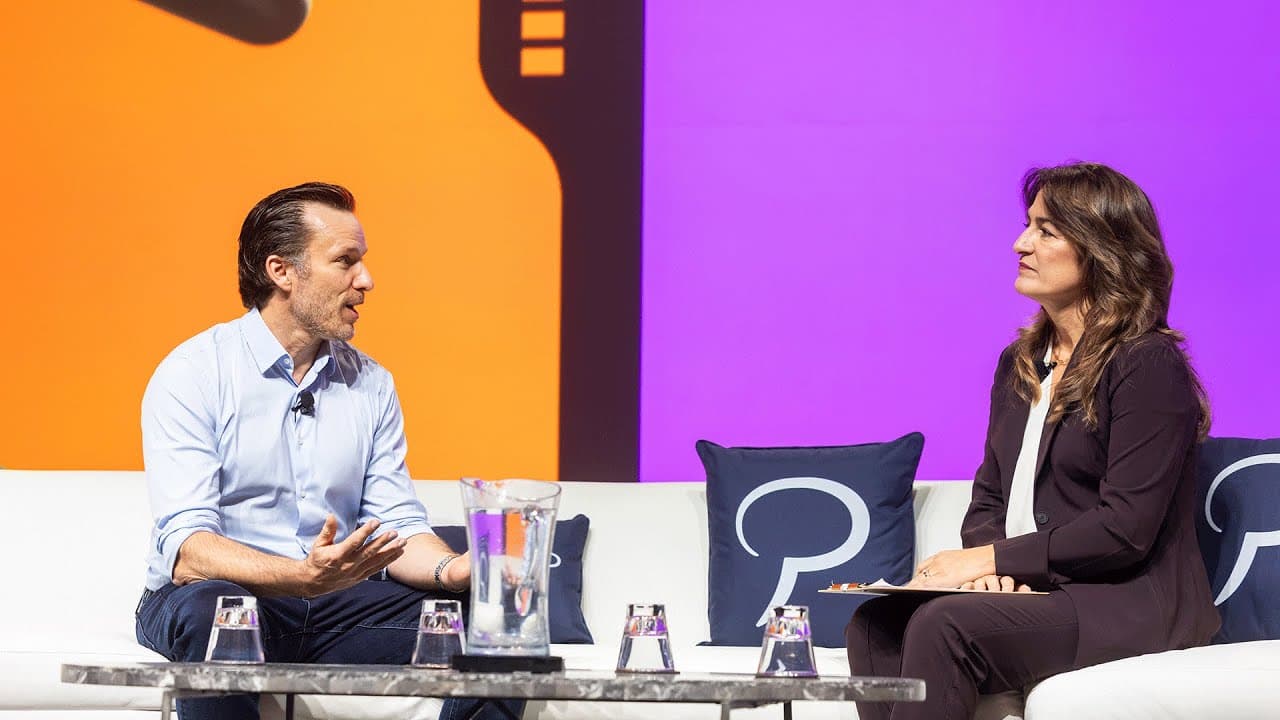
Loyalty - Back to the Roots | Phocuswright Research with Madeline List
Summary
Madeline List, Manager of Research and Special Projects at Phocuswright, presents original research on travel loyalty with the argument that industry discourse has lost sight of what loyalty actually means. Drawing on a study of US-based leisure travelers, she contends that loyalty—defined as repeat brand patronage rooted in a strong feeling of support or allegiance—has been overshadowed by an obsession with points, miles, and program mechanics that are merely vehicles toward that goal, not the goal itself.
The research begins by establishing a baseline: most travelers either rotate across multiple brands or travel infrequently enough that they have not formed a single favorite. Among those who do have preferred brands, the criteria for selection are strikingly fundamental. For airlines, top selection factors are value for money, competitive pricing, on-time performance, and convenient routes and departure times. For hotels, value and price again dominate, followed by cleanliness and amenities, with loyalty programs entering the top five. OTA users with a favorite platform are the most price-driven of all segments, though they also cite convenient booking experience and customer service—with loyalty programs ranking fifth.
List argues clearly that product quality and pricing strategy are non-negotiable prerequisites. Without those in place, she sees no basis for expecting a loyalty program to shift traveler behavior. For brands that have achieved a high-caliber product, however, program relevance becomes meaningful. The data supports heavy engagement: 52% of US leisure travelers redeemed points for at least one component of their most recent trip. Redemption patterns skew by generation—two in three millennials who redeemed did so using credit card points, OTA programs are disproportionately popular with younger travelers, and provider miles dominate among Boomers and the Silent Generation.
The financial motivation behind redemption is explicit: travelers cite reducing out-of-pocket trip costs, making expensive destinations accessible, and directing saved money toward experiences they care most about. Beyond redemption, 84% of leisure travelers reported engaging in at least one "gaming" behavior in the prior year—including buying gift cards solely to earn points, opening credit cards to capture sign-up bonuses before canceling, flying to destinations they would not otherwise visit to maintain status, or making purchases on behalf of others to accumulate points.
Despite this program engagement, List cautions against conflating program participation with actual loyalty. She presents data showing that most travelers with a declared favorite brand still used a competitor in the past year, particularly in the OTA category. The primary reasons travelers "cheat" on their preferred brand are: better pricing or value, better product fit for a specific trip, and—notably—novelty. The desire to simply try something new appears as a top driver across airlines, hotels, and OTAs, making it what List calls "the most insidious" threat to loyalty because it reflects not dissatisfaction but restlessness.
List closes with a prediction: the winners in the loyalty space will be brands that simultaneously maintain strong product quality and pricing, offer a sense of novelty, and deliver genuine value through their loyalty programs. She frames loyalty not as a product of any single program interaction, but as the cumulative result of all brand touchpoints across the customer lifetime—a challenge complicated further by labor shortages, the uneven integration of AI customer service, and an ever-expanding number of physical and digital touchpoints.
Key Takeaways
- •Loyalty programs cannot compensate for poor product quality or uncompetitive pricing—these fundamentals must be solved first before any program can move the needle on traveler behavior.
- •52% of US leisure travelers redeemed points or miles for at least one trip component on their most recent trip, indicating high program engagement driven in part by economic pressures.
- •84% of leisure travelers participated in at least one loyalty program gaming behavior in the past year, such as opening credit cards for sign-up bonuses or purchasing for others to accumulate points.
- •Most travelers who have a favorite brand still used a competitor in the prior year, meaning declared loyalty does not translate to exclusive behavior.
- •Novelty—the desire to simply try something new—is a top reason travelers deviate from preferred brands and is particularly hard for brands to combat because it is not driven by dissatisfaction.
- •Millennials disproportionately use credit card points for travel redemptions, while Boomers and Silent Generation travelers lean heavily on airline and hotel provider miles—loyalty strategy must account for generational differences.
- •OTA loyalists are the most price-sensitive of all traveler segments both when choosing a favorite and when switching away, meaning OTAs must compete aggressively on price to retain their most loyal users.
- •Loyalty should be defined and measured as the totality of all brand interactions across the customer lifetime, not as a product of any single program interaction or enrollment.
- •Brands should pursue a dual strategy: compete on product quality and pricing while also offering novelty-adjacent experiences to reduce the appeal of switching to alternatives.
- •The proliferation of AI customer service tools and labor shortages creates new risks to brand consistency, making it harder to deliver reliable experiences across all touchpoints.
Transcript
Good to be back up here. So, the study I'm going to speak about today is one that was born of an observation that conversations about loyalty in travel seem to be losing the plot because I'm very aware of what types of associations come to mind when we say the word loyalty. It's points, it's miles, it's status, lounges, upgrades, and those are all very fair. I know why those do come to mind, but they seem to stray extremely far from the actual dictionary definition that I've pictured above here....