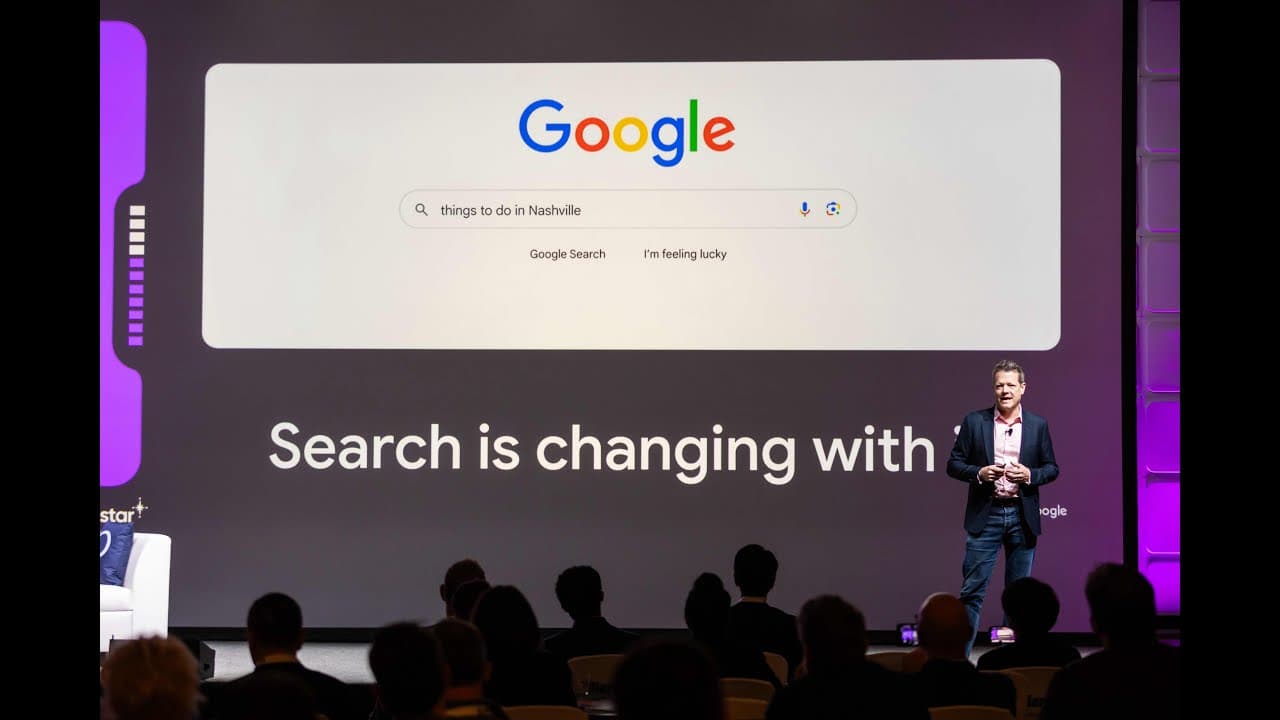
Passivebolt - Global Startup Pitch Scaleup Winner: Kabir Maiga, CEO at The #Phocuswright Conference
Summary
Kabir Maiga, CEO of PassiveBolt, delivered the winning pitch for the Global Startup Pitch Scaleup competition at The Phocuswright Conference, presenting his company's platform Keyshare, which reimagines hotel access through verified digital identity rather than proprietary mobile keys.
Maiga opened by diagnosing why mobile keys have failed to deliver on their decade-long promise in hospitality. Despite being available for over ten years, mobile key adoption remains in the single digits. He cited three core reasons: Bluetooth unreliability erodes guest trust, the friction of downloading an app for a one-time stay discourages 90% of guests who still end up at the front desk expecting traditional check-in, and high costs tied to per-credential issuance from smartphone wallet platforms make scaling across brands prohibitive. The front desk, he argued, remains an unresolved operational bottleneck.
By contrast, Maiga pointed to the automotive industry as the gold standard — cars that simply unlock as you approach — and argued hospitality is falling behind that benchmark. Smartphone-native wallet keys have emerged but remain too expensive and too tightly coupled to loyalty apps to achieve broad adoption.
PassiveBolt's response is Keyshare, a platform that makes a guest's verified digital identity — such as a mobile driver's license or e-passport — the access credential itself, rather than issuing hotel-specific tokens that only prove possession. Guests can walk in, tap their phone against the Keyshare Puck (a next-generation hotel key encoder device), authenticate via their government-issued digital ID, check in, unlock their room, and receive personalized service — all without downloading any app.
Maiga described two pathways enabled by the Puck. Path A serves guests who do not yet have a digital ID on their phone: the tap instantly delivers a wallet key to their native wallet app, eliminating front desk friction. Path B serves guests who already hold a digital ID: the identity itself becomes the key, removing the need for any separate credential and eliminating per-credential issuance costs entirely.
The company situates itself at the intersection of hospitality and a global government-led digital ID rollout. Maiga cited a Gartner prediction of over 500 million standards-based digital identity credentials issued by end of 2026, encompassing European Digital Identity Wallets, US mobile driver's licenses, and international e-passports. Keyshare is designed to accept all of these today, with no app, no vendor lock-in, and no integration overhead.
On traction, PassiveBolt operates on a subscription model for hotels, is currently piloting across four US states, has enabled 35,000 travelers, and powers two national-level digital ID systems with more countries joining. The company's competitive moat includes five patents, a go-to-market strategy that scales through partner channels, and a core team exclusively focused on product development. Maiga also highlighted prior deployment of digital access to over 120 million vehicles globally as proof of technical credibility. The closing vision: one verified identity that unlocks everything — no apps, no accounts, no friction — delivering a seamless travel continuum.
Key Takeaways
- •Mobile key adoption in hotels has stagnated in single digits after more than a decade, primarily due to Bluetooth unreliability, app download friction, and high per-credential costs.
- •Requiring guests to download a hotel-specific app for a one-time stay is a proven friction point — 90% of guests still default to the physical front desk.
- •Verified digital identity (government-issued mobile IDs, e-passports) can replace proprietary hotel key tokens, eliminating both the friction of credential issuance and the cost tied to it.
- •The Keyshare Puck enables two upgrade paths at the front desk: instant wallet key delivery for guests without digital IDs, and full identity-as-key authentication for those who have them.
- •Gartner projects over 500 million standards-based digital identity credentials by end of 2026, creating a large addressable base for identity-native access solutions.
- •No app download is required — PassiveBolt's model matches the frictionlessness of Apple Pay or car proximity access, setting a new UX baseline for hospitality.
- •Building on open government standards (not proprietary platforms) avoids vendor lock-in and enables cross-brand, cross-property, cross-country scalability.
- •PassiveBolt's prior deployment of digital access to 120 million vehicles globally provides technical validation transferable to hospitality.
- •A partner-led go-to-market allows the internal team to remain exclusively focused on product innovation rather than direct sales at scale.
- •Five patents and national-level digital ID system deployments in multiple countries constitute a defensible IP and infrastructure moat.
Transcript
Let's talk about the future of hotel access because keys, fobs, kiosks are becoming optional. Your verified digital identity is becoming the only key that you need and we've built tools to harness it. Our platform is keyshare. Mobile keys and hotels have really not lived up to their promise. They've been around for over a decade. Yet adoption remains in the single digits. Why? Because Bluetooth is unreliable, leading to low trust. Because downloading an app for a one-time stay just isn't worth i...