Travel, Trust and America's Welcome with U.S. Travel Association CEO Geoff Freeman #Phocuswright
Summary
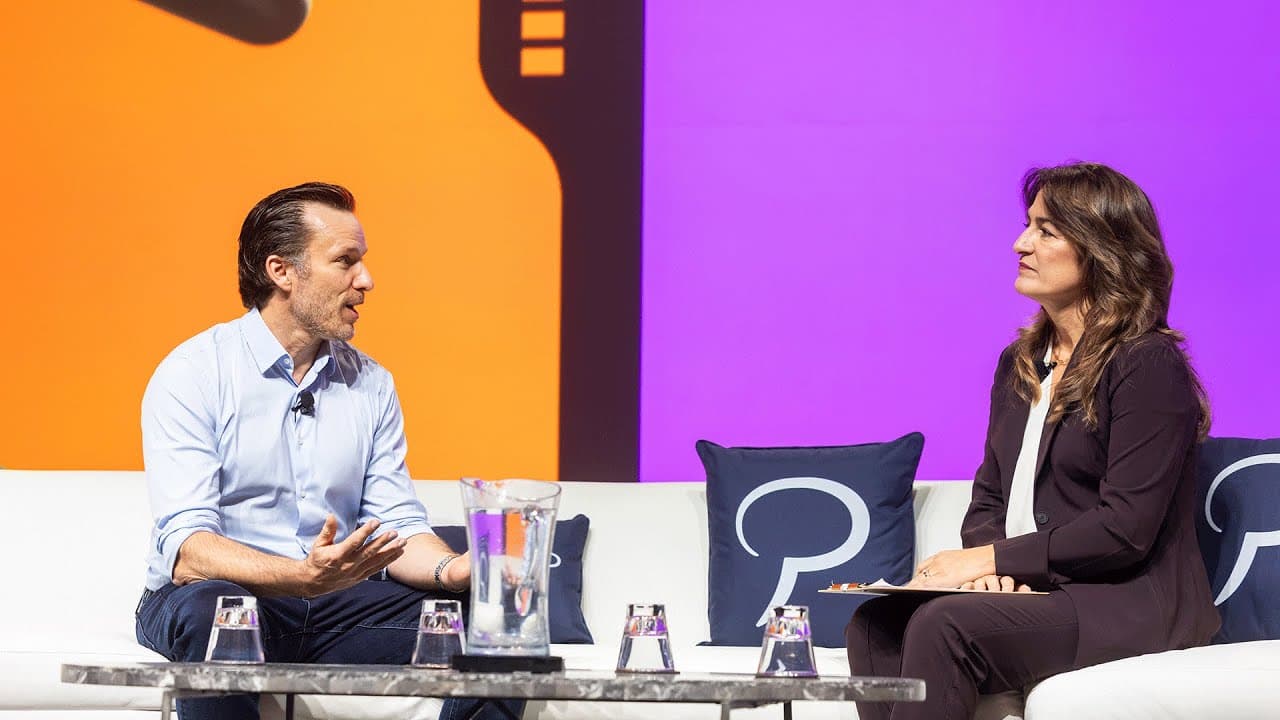
Geoff Freeman, President and CEO of the U.S. Travel Association, speaks with Phocuswright's Mitra Sorrells in a frank fireside-chat format about the mounting threats to America's competitiveness as a global travel destination. Freeman opens by condemning government shutdowns as "borderline criminal," noting that the most recent shutdown caused at least a 10% reduction in travel bookings, with airline CEOs reporting even steeper forward-looking declines through year-end. He expresses cautious optimism that the wounds are fresh enough to deter a repeat, but admits confidence in that environment is foolhardy.
Freeman acknowledges that the Trump administration has taken several positive steps for travel—securing over $13 billion for air traffic control modernization, reducing visa wait times, streamlining customs and border protection, and launching the Great American Road Trip initiative. Despite this, he reports that international travel to the U.S. is projected to fall 6% in 2025, led by a 24% collapse from Canada. The U.S. will be the only nation in the world to see a net decline in international arrivals this year, with 68 million visitors versus 79 million pre-pandemic in 2019—4 million fewer than the prior year. Freeman attributes the decline to a complex mix of factors: Canada's politically personal response to U.S. rhetoric, the strong dollar, Russian airspace restrictions limiting Asian capacity, and, most alarmingly, widespread fear of detention or device searches at the border. He notes that international travelers are now mentally preparing for a U.S. visit the way many prepare for travel to authoritarian states—wiping devices and taking precautions.
On Brand USA, Freeman reveals that Congress cut $80 million—approximately 80%—of the organization's public funding in a reconciliation bill, with the money coincidentally redirected to relocate the Space Shuttle Discovery to Houston. He reports that bipartisan legislation has now been introduced to restore that funding. However, Freeman argues that more destination marketing alone won't solve the problem; the core message travelers need to hear is that they are genuinely welcome.
Freeman calls the proposed $250 "visa integrity fee" the industry's top priority threat, describing it as a deterrence fee that would make the U.S. the second most expensive country in the world to enter after Bhutan. A family of four from Brazil would pay $1,000 just for entry privilege. The fee was supposed to take effect on October 1 but has been successfully delayed. He also addresses a visa bond pilot program, noting it targets countries representing less than 1% of U.S. arrivals and is a secondary concern.
On the domestic side, Freeman confirms the travel economy has bifurcated into a K-shaped recovery: affluent travelers spending at record levels while a large segment pulls back due to economic uncertainty. He expects this to be temporary as long as some degree of economic certainty is restored. On technology, Freeman describes AI-driven CT scanning at TSA checkpoints as capable of reducing bag-processing wait times by 70%, with pilot programs already underway—but notes the current funding trajectory means full airport rollout won't be complete until 2042, because Congress diverted $1.5 billion per year of the 9/11 security fee to unrelated projects. Freeman closes by urging the global travel industry to become far more vocal advocates for the sector, likening the need to the organized lobbying seen in manufacturing and healthcare.
Key Takeaways
- •The U.S. will be the only country in the world to record a net decline in international arrivals in 2025, with 68 million visitors versus 79 million pre-pandemic—a meaningful structural warning, not a blip.
- •Fear of U.S. border enforcement is now a primary deterrent for international travelers, with some preparing for visits the way they would for travel to authoritarian regimes—wiping devices and taking precautions.
- •The proposed $250 visa integrity fee is the U.S. Travel Association's top legislative priority to block; if enacted, it would make the U.S. the second most expensive country in the world to enter and could cost a Brazilian family of four $1,000 before they even arrive.
- •Brand USA lost 80% of its public funding ($80 million) in a reconciliation bill; restoring that funding via bipartisan legislation is underway but not yet secured.
- •Marketing alone cannot fix the welcome problem—what travelers need to hear clearly is that they are wanted, and conflicting signals from administration officials are actively undermining that message.
- •AI-enabled CT scanning at TSA checkpoints is technically ready to cut bag-processing times by 70%, but at current funding levels full airport deployment won't complete until 2042 because Congress diverted $1.5B/year of security fees to unrelated spending.
- •Canada's 24% decline in travel to the U.S. is politically driven and may be the most controllable factor if diplomatic relationships improve; other markets like Germany (-10%) and the UK (+5%) show the picture is nuanced and market-specific.
- •The domestic travel economy is K-shaped: luxury and premium segments are outperforming while mass-market travelers are pulling back due to economic uncertainty, but industry leaders do not expect this to be a permanent structural shift.
- •The U.S. is failing to recognize it is in direct global competition for travelers—countries like Saudi Arabia are investing north of $1 trillion to build tourism economies while the U.S. is cutting promotion budgets.
Transcript
uh you know as our theme says it is now game on again here in the US the shutdown is over. What is the impact that you have seen so far and where are you still potentially seeing some lingering effects? >> Yeah, the uh the shutdown was terrible and our opinion when it comes to federal government shutdowns is that all shutdowns are completely irresponsible. Uh there's no legitimate explanation for why a government should uh uh be able to do this. It's borderline criminal to send 13,000 air traffi...