The Global Roundtable: Leading Tourism into Balance
Summary
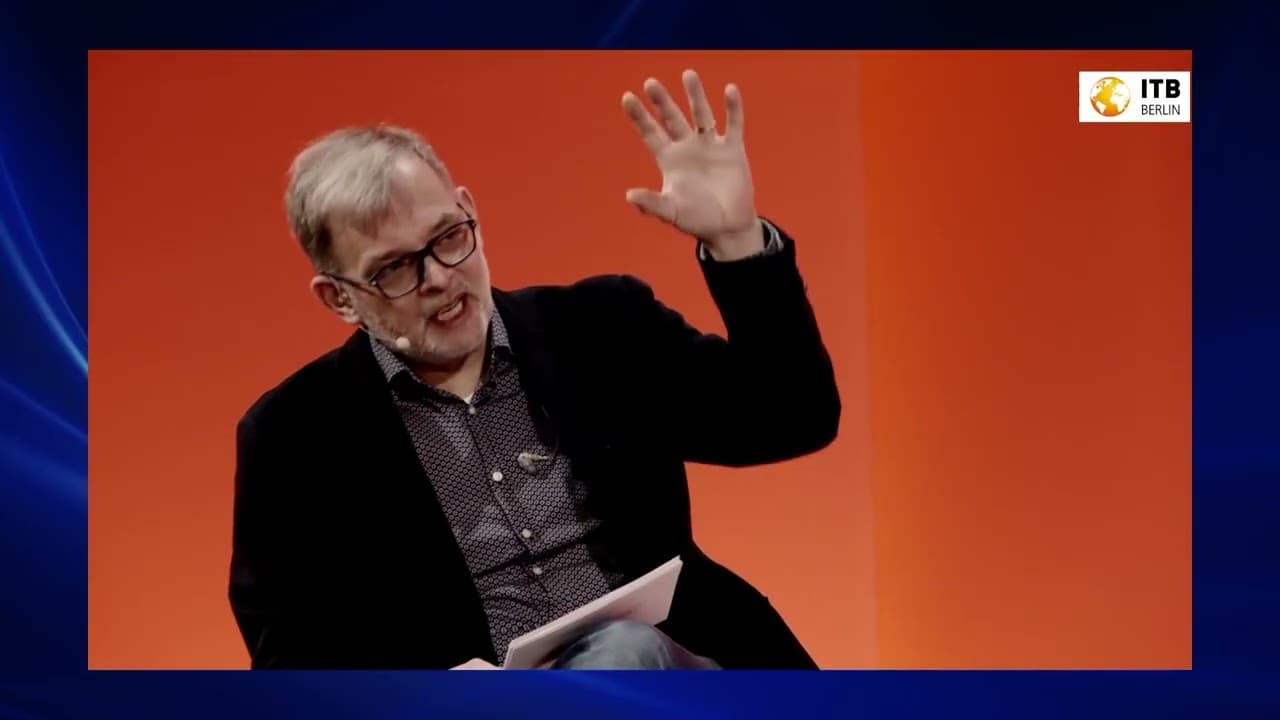
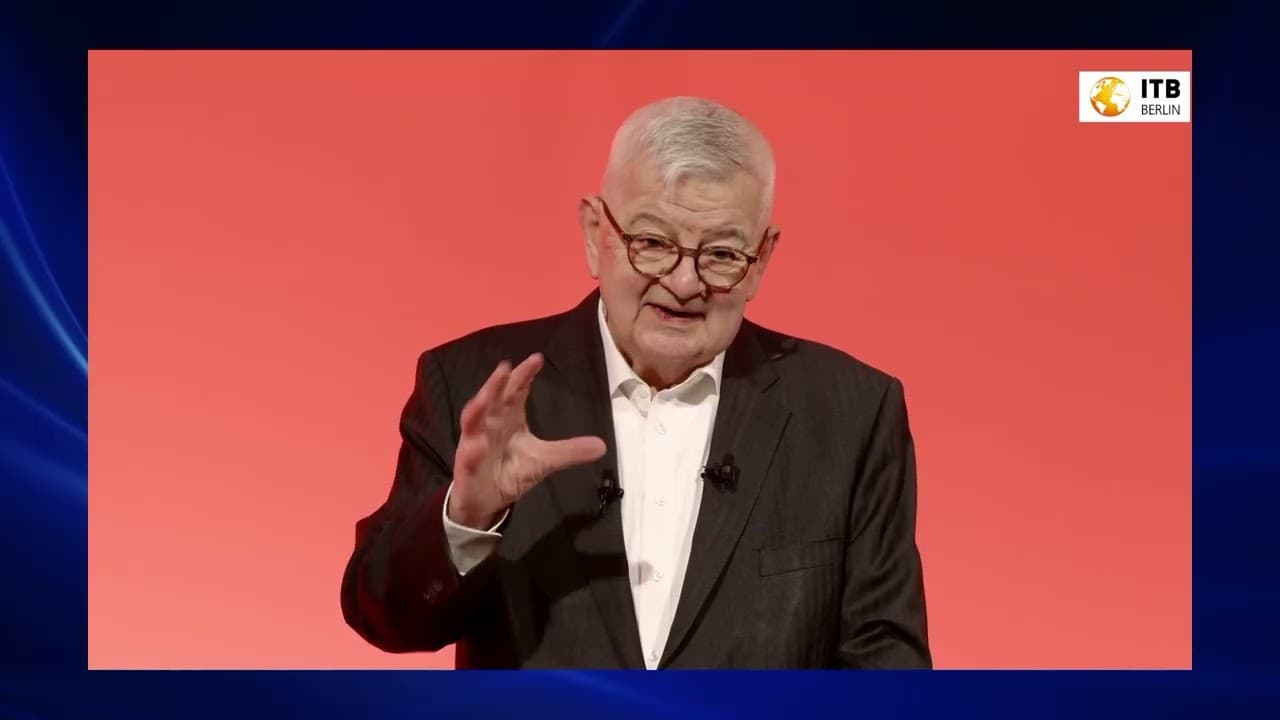
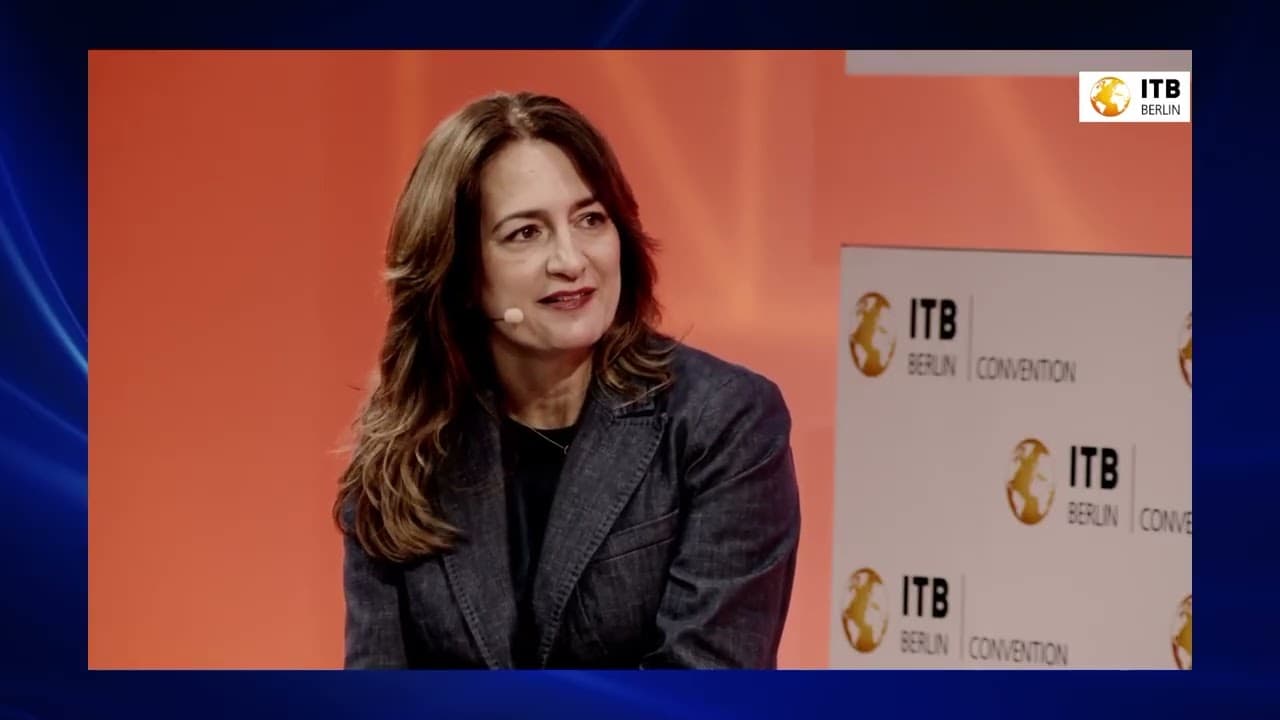
This Global Roundtable at ITB Berlin 2026, moderated by TV presenter Marianna Evenstein, brought together three senior voices — Sandra Carvao (Chief of Tourism Market Intelligence and Competitiveness, UN Tourism), Natalya Tabaka (Chairperson, State Agency for Tourism Development of Ukraine), and Márcio de Jesus Lopes Daniel (Minister of Tourism, Republic of Angola) — to debate what 'leading tourism into balance' concretely means across radically different destination contexts. Eduardo Santander (CEO, European Travel Commission) was unable to attend due to travel disruption, a real-time illustration of the 'poly-crisis' framing discussed earlier in the day.
Angola's Minister set the stage by framing his country's challenge as an emerging destination starting 'from scratch' after being an oil-dependent economy. He highlighted the Okavango–Zambezi Transfrontier Conservation Area (shared with Zambia, Zimbabwe, Botswana, and Namibia) as a case study: Angola is the least-developed and most pristine node of this five-country area, drawing investors and visitors precisely because of its untouched nature. The risk, as he put it, is transforming that pure nature into 'a destination with 300 safaris per day' through unmanaged growth. Angola's response is a tourism master plan that designates specific zones for luxury/low-volume tourism (waterfalls, desert, national parks) while allowing more volume-based development only in appropriate sun-and-beach areas. The government has committed half a billion euros to infrastructure a new destination area, but insists local communities, NGOs, and environment associations must be involved before the master plan is locked — invoking the phrase 'don't plan for us, plan with us.' He also noted that Angola hosted a ministerial conference on tourism and air connectivity in Luanda the prior year, gathering African ministers of tourism and transport, only to discover that the critical missing voice was the ministers of home affairs who control border policy — a governance gap that blocked visa-free and open-skies progress.
Sandra Carvao provided the global data and policy layer. She stressed that 40% of all international travel worldwide occurs between June and September, highlighting the severity of seasonality concentration. Additionally, 40% of the world's 1.5 billion international travelers go to just 10 countries, underscoring how concentrated demand is geographically. She argued against one-size-fits-all solutions, noting that even within over-tourism hotspots like Venice, Amsterdam, or Barcelona, moving off-peak or away from the most-visited zones changes the picture dramatically. A key finding from a UN Tourism survey: when residents were asked what measures they preferred, the majority did not say 'stop growth' — they asked for better infrastructure, better transport, and better housing policies. She argued that governance is experiencing a renaissance: tourism policy has historically been dominated by marketing and promotion, but the pressures of over-tourism have forced governments to treat tourism as a cross-cutting sector requiring coordination with housing, environment, transport, and investment ministries. She also pushed back on the assumption that 'sustainable' means small-scale, arguing that large investments can be sustainable if they enforce local hiring (including managerial positions, not just entry-level), sustainable energy, water treatment, and waste management — while some smaller operations may not meet those standards.
Natalya Tabaka framed Ukraine's situation as the inverse of over-tourism: wartime domestic resilience and preparation for ethical post-war reopening. She described two active projects — one focused on helping Ukrainians (including veterans and military personnel) find rest through 'non-toxic' mental recharge, and the 'Silent Mood' project, which surfaces little-known Ukrainian destinations to redistribute domestic visitors away from overcrowded spots like the Carpathian mountains toward quieter areas. She emphasized that when Ukraine reopens internationally, growth must be 'ethical' — avoiding turning trauma into spectacle, and preparing both visitors and communities for how to engage respectfully with war memorials and sites of resilience.
The session closed with each panelist offering a single concrete action for the next 12 months: Tabaka called for deep dialogue and shaping the tourism agenda together with communities; Carvao called for each destination to define what 'balance' means relative to its own development objectives; and the Angolan Minister called for including local communities in shaping the tourism vision — summarizing with 'tourism is for people, not the people for tourism.'
Key Takeaways
- •40% of all international travel worldwide occurs between June and September, and 40% of 1.5 billion international travelers visit just 10 countries — Sandra Carvao (UN Tourism) used these figures to argue that the global opportunity lies in diversifying both in time (seasonality) and geography (new destinations).
- •Angola has approved half a billion euros to infrastructure a new tourism destination area and is using a master plan to zone different tourism typologies by area — luxury/low-volume in national parks, waterfalls, and desert; higher-volume sun-and-beach only in appropriate zones.
- •The Okavango-Zambezi Transfrontier Conservation Area spans five countries (Angola, Zambia, Zimbabwe, Botswana, Namibia); Angola is the least-developed node and faces the specific risk of unmanaged demand converting untouched wilderness into mass-safari operations if governance is not established now.
- •Angola hosted a ministerial conference on tourism and air connectivity in Luanda in 2025 where ministers of tourism and transport met — only to discover the critical missing stakeholder was ministers of home affairs who control border policy, revealing a structural governance gap blocking visa-free and open-skies progress across Africa.
- •UN Tourism survey finding: when residents in tourism destinations were asked what measures they preferred, the majority did not call for stopping growth — they asked for better infrastructure, better transport, and better housing policy. This reframes the policy debate away from growth vs. no-growth.
- •Carvao drew a distinction between 'sustainable' as synonymous with small-scale versus truly sustainable large investments: a large resort can be sustainable if it enforces local hiring at all levels including management, uses sustainable energy, and manages water and waste — while some small operators may not meet those standards.
- •Natalya Tabaka described Ukraine's 'Silent Mood' project, which highlights lesser-known destinations across Ukraine to redirect domestic visitors away from overcrowded areas like the Carpathian mountains, providing respite for Ukrainians including veterans during wartime.
Transcript
We are very honored that Natalya is also going to be part of our global roundt and after talking about poly crisis our global roundt panel this year is in fact going to reflect the motto of the ITB itself and that is as we've been hearing throughout the day leading tourism into balance. So balance of course sounds very nice. It sounds very reassuring. But I think we all are aware that in tourism balance is rarely straightforward. It's rarely simple because even if we have growth which is a good ...